

We’re thrilled to announce a new collaboration with internationally-acclaimed photographic artist, James Lewin.
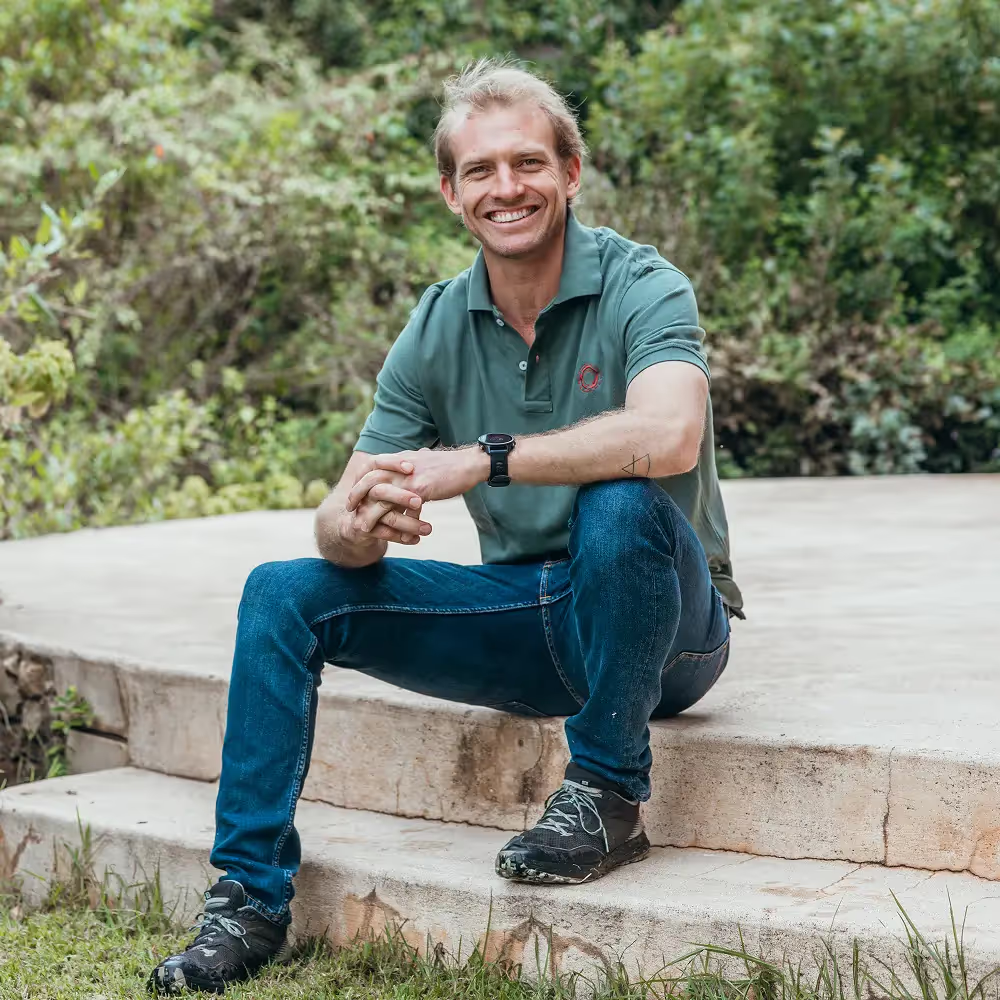
James is married to one of our safari specialists, Tamara and also guides some of our trips. As part of the Africa Born family, we’ve long been a fan of his work, which brings a unique perspective on some of Africa’s most iconic wildlife in their natural habitat.

As soon as you arrive on safari with us, you’ll spot James’ award-winning work, as we’ve commissioned a series of beautiful postcards for our guests.
His extraordinary and dramatic compositions have a level of intimacy rarely seen, and often shot from just a few feet away, many at ground level. Our favourites include an almost-biblical scene of a congregation of wildlife at the waterhole, an iconic shot of a male lion perched high in an acacia and powerful portraits of silverback gorillas in the Virunga Mountains and mythical African black leopards in Laikipia. His works featuring elephants picking their way through the surreal winterthorn forests of the Lower Zambezi and crossing Amboseli’s vast plains dwarfed by the ominous dark clouds of an advancing storm are incredibly powerful.
If you like the look of his work, drop us a line: his prints really are the perfect memento of your trip.
Better still, every purchase gives back to the wild. A percentage of sales will be donated to Tsavo Trust: a relatively small, field-based non-profit organisation making a massive impact in Tsavo, one of the world's largest biodiversity strongholds; a vital sanctuary for vulnerable African wildlife that amounts to over 49% of Kenya’s protected areas.

If you’d like to learn more about James’ approach and see his portfolio of work, do get in touch with us. And in the meantime James has very graciously shared his top tips with us. Results may vary, but the wildlife won’t disappoint!
1. Don’t always zoom in
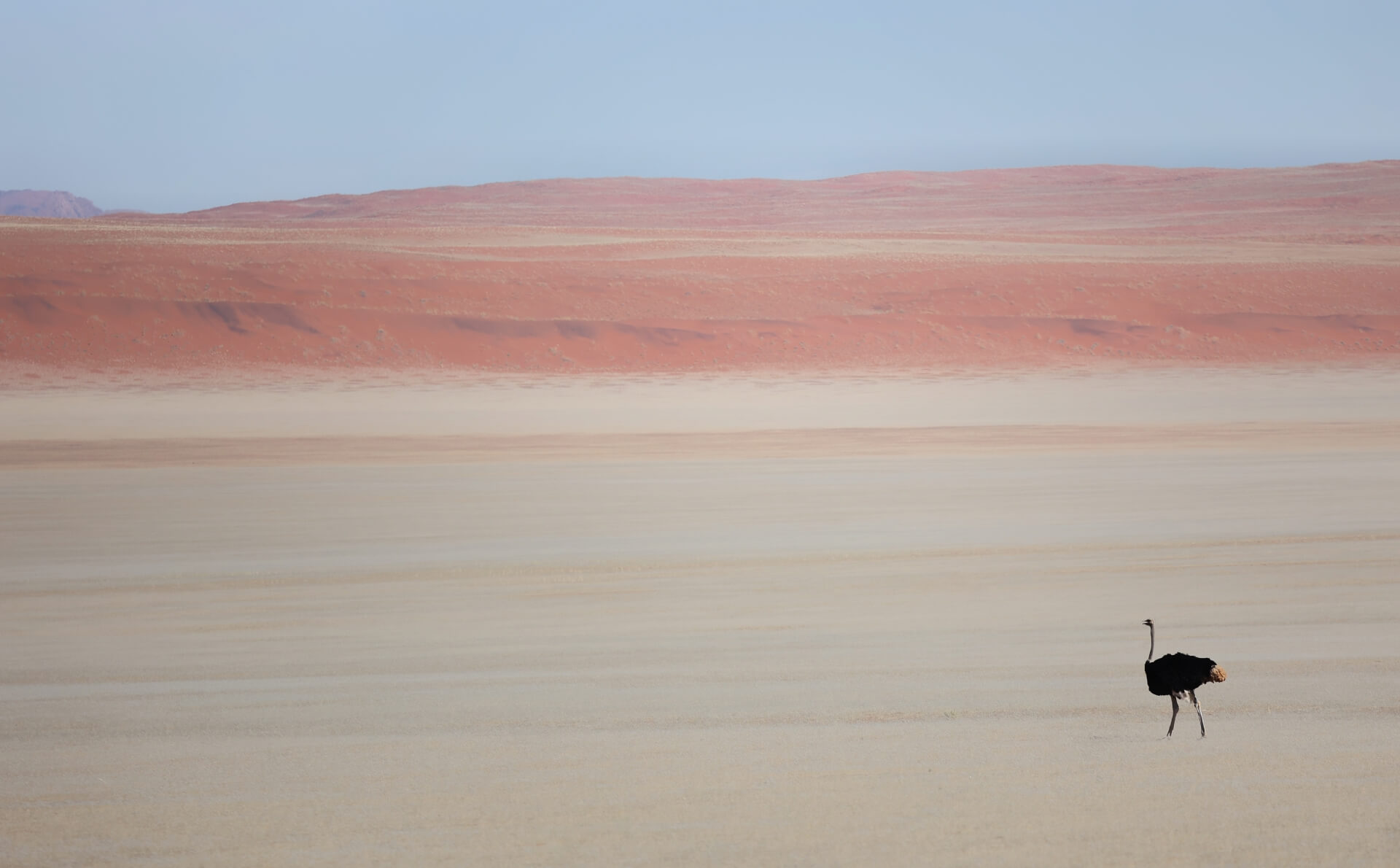
If you’re using a zoom lens, it can be tempting to get as close as possible. However, including some of the surrounding landscape can elevate your images to a new level. Not only does this add depth, but it also gives a stronger sense of place, showing the environment your subject inhabits. Look for natural lines, textures, or interesting features in the landscape that lead the viewer’s eye toward your subject. By balancing the animal with its surroundings, your photos become more immersive and tell a fuller story of the scene.

2. Consider the horizon
The placement of your subject can make the difference between an image that works and one that doesn’t. Avoid having the horizon or distractions, such as trees, cutting through the outline of the animal. Lower your camera to position the animal above the horizon, or raise it to frame the subject below. Place trees or other elements off to one side to create balance within the frame and enhance the composition. This is something that should always be on your mind whilst photographing.

3. Patience first
Your guide can help assess whether a sighting is worth waiting for or if it’s better to move on in search of another subject. Just because there’s no photo opportunity at that very moment, it doesn’t mean one won’t appear shortly.

4. Wildlife first
Wildlife should always come first, never force a shot. As photographers, we are observers, and any attempt to manipulate animals will show in the final image. Avoid making noises or calling out to wildlife, such as whistling at a sleeping lion; it is both unethical and unlikely to produce the desired result.

5. Keep and eye on your shutter speed
Light changes rapidly during the early morning and late evening hours, so make sure your shutter speed is fast enough to freeze the action. As a guideline, try to keep your shutter speed above 1/500s to capture sharp images of moving subjects. When the light is very low and you must use a slower shutter speed, shoot in bursts. Often, one of the frames in the burst will turn out sharp, even if some are affected by camera shake.

6. Make sure your camera is ready
Some wildlife sightings only give you a fleeting opportunity to capture a moment. Keeping your camera settings up to date while on the move and having your camera within easy reach ensures you’re ready to seize that special shot before it could disappear in seconds.

7. Use the flip screen of your camera
Practicing with your camera’s flip screen before your safari can be a game-changer. It allows you to shoot from lower, more immersive perspectives, which can completely transform the feeling of a photograph. Capturing animals at eye level creates images that are far more engaging and compelling, taking your shots well beyond the ordinary.

8. Bring two camera bodies
While not essential, having the ability to switch quickly between two lenses can make a world of difference for photographers. Depending on the time of year, conditions can get very dusty, so minimising lens changes helps prevent dust from landing on your camera sensor and keeps your images clean.

9. Aperture controls the style
Consider the scene and think about how to make your subject stand out. Composition always comes first, but understanding aperture gives you control over what is in focus and what is not. In a cluttered, bushy environment, shooting an animal at f/2.8–f/4 blurs the background, drawing attention directly to your subject. Conversely, when photographing a large herd of elephants crossing the plains under dramatic skies, using f/8 keeps all the animals in focus and adds depth to the scene.

10. Know your camera before you go
Familiarising yourself with your camera’s basic controls before a safari will help you avoid missing key moments and allow you to fully enjoy the experience.

So grab your camera and head off on safari with us. Whether you’re a seasoned photographer or a total amateur, our trips offer some of Africa’s most incredible photo opportunities. And even if your shots don’t quite match James’, his extraordinary works make the perfect memento, while also raising funds for Tsavo Trust’s vital conservation work.
Subscribe to our newsletter
Lorem ipsum dolor sit amet, consectetur adipiscing elit. Suspendisse varius enim in eros elementum tristique.

Inspiration
Beyond the vehicle: the many ways to safari
Paolo and I love to go beyond the ordinary on safari and for us, that means getting out of the vehicle and really immersing yourself in the raw rugged beauty of Africa.
Guide Diaries
Inspiration
From desert to delta: Namibia and Botswana adventures
Botswana is having a moment, so when a returning client requested a fresh spin on this classic southern African safari destination, we jumped at the chance.

Inspiration
Africa’s top bespoke safari companies
Africa is home to hundreds of safari companies. The choice can be overwhelming, but only a select few deliver truly bespoke, luxury safaris at the very highest level.